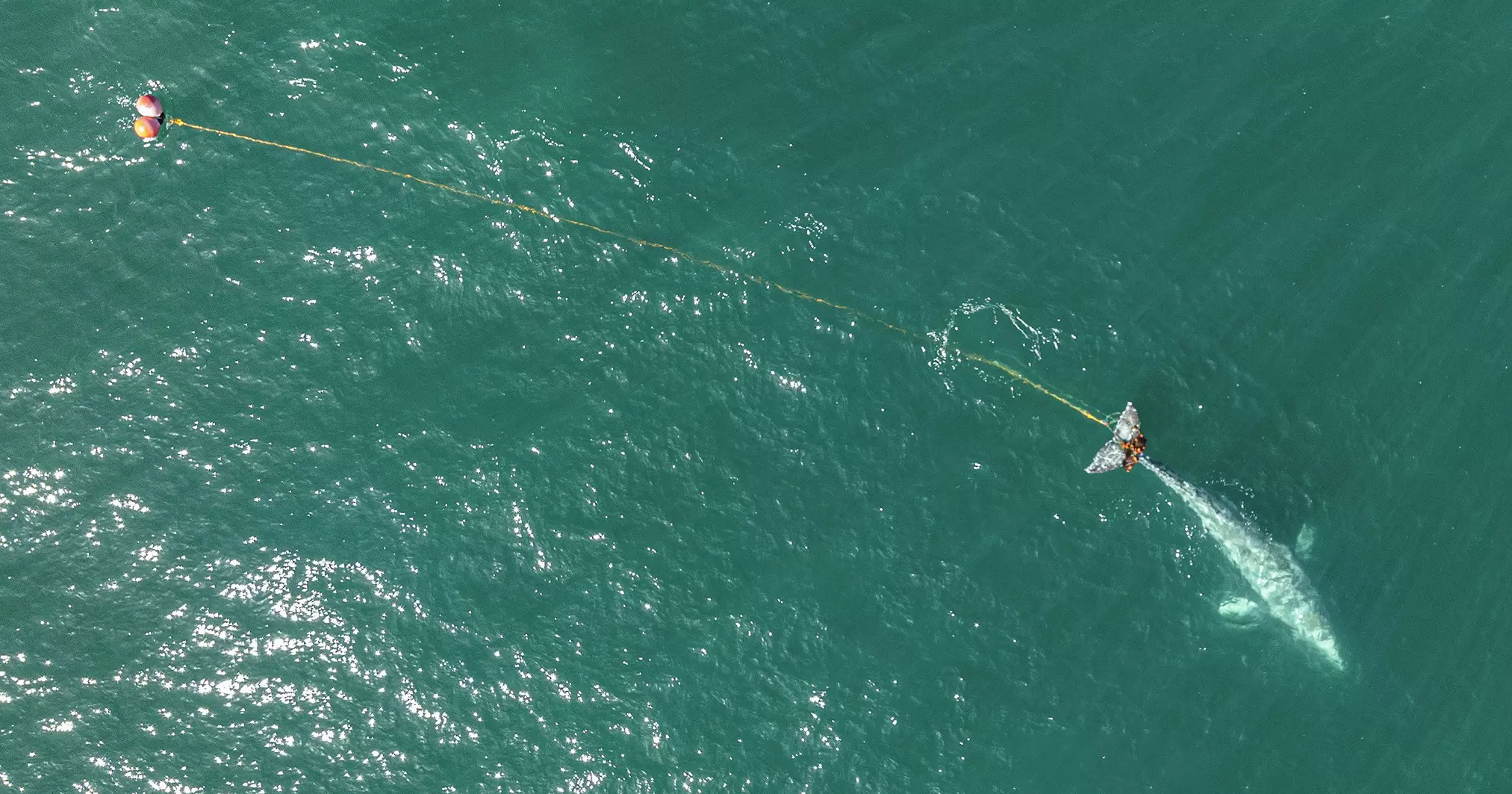
A young male sperm whale, now widely known as Timmy, has sparked an international wave of concern after being spotted struggling near the Wadden Sea off Germany’s North Sea coast. First sighted disoriented and dangerously close to shallow tidal flats near the island of Sylt, marine rescue teams launched an urgent intervention to guide the massive animal back into deeper waters. What followed was a tense, hours-long operation captured in a series of powerful images that have since circulated globally—offering a raw glimpse into the challenges of large-scale marine rescue.
Timmy’s plight underscores a recurring crisis: deep-water cetaceans venturing into shallow, treacherous zones where tidal shifts and disorientation can be fatal. Sperm whales, adapted to open ocean depths exceeding 1,000 meters, are particularly vulnerable when they enter intertidal zones. Their echolocation systems, fine-tuned for deep water, falter in flat, muddy environments, often leading to fatal strandings.
The Discovery: How Timmy Was First Spotted
On a routine patrol, a German coast guard surveillance aircraft observed an unusual disturbance in the tidal channels near List on Sylt. What appeared at first as a dark shadow on the sandbanks quickly revealed itself to be a lone sperm whale, repeatedly surfacing in water barely deep enough to submerge its back. Biologists on board immediately flagged the sighting as high-risk.
Local rescue coordination was triggered within minutes. The Wadden Sea, a UNESCO World Heritage site, is known for its extreme tidal ranges—up to four meters—which can trap marine life in hours. With the next low tide just six hours away, time was not on Timmy’s side.
Rescue teams from the German Marine Research Consortium (GEOMAR), the Wadden Sea National Park Authority, and the German Lifeboat Society (DGzRS) mobilized boats and medical response units. Drones were deployed to monitor Timmy’s movements from above, while veterinarians prepared for potential health assessment if the whale could be safely approached.
First Response: Stabilization and Monitoring
Upon reaching the site, responders found Timmy listing slightly to one side, indicating possible buoyancy issues or internal injury. Sperm whales rely on a complex system of air sinuses and spermaceti organs for diving control—damage or infection in these areas can impair orientation.
The primary goal shifted from mere relocation to stabilization. Teams formed a semi-circle around the whale using boats to create a visual and acoustic barrier, aiming to prevent further inland movement. Underwater speakers played pre-recorded sperm whale vocalizations from healthy pods, a technique occasionally successful in reorienting confused individuals.
Water pumps were used to keep Timmy’s blowhole and dorsal fin moist during low tide exposure. Though not fully stranded, the dropping water level left his lower body partially aground, risking organ damage from his own weight. Rescuers doused his skin with seawater to prevent dehydration and overheating—a critical step often overlooked in public perception of whale rescues.
Photographs from this phase show teams kneeling in mudflats, gently guiding water over Timmy’s flank as fog rolled in from the North Sea. These images, shared widely by GEOMAR and local media, humanized the effort and amplified public awareness.
Challenges of a Live Rescue in the Wadden Sea
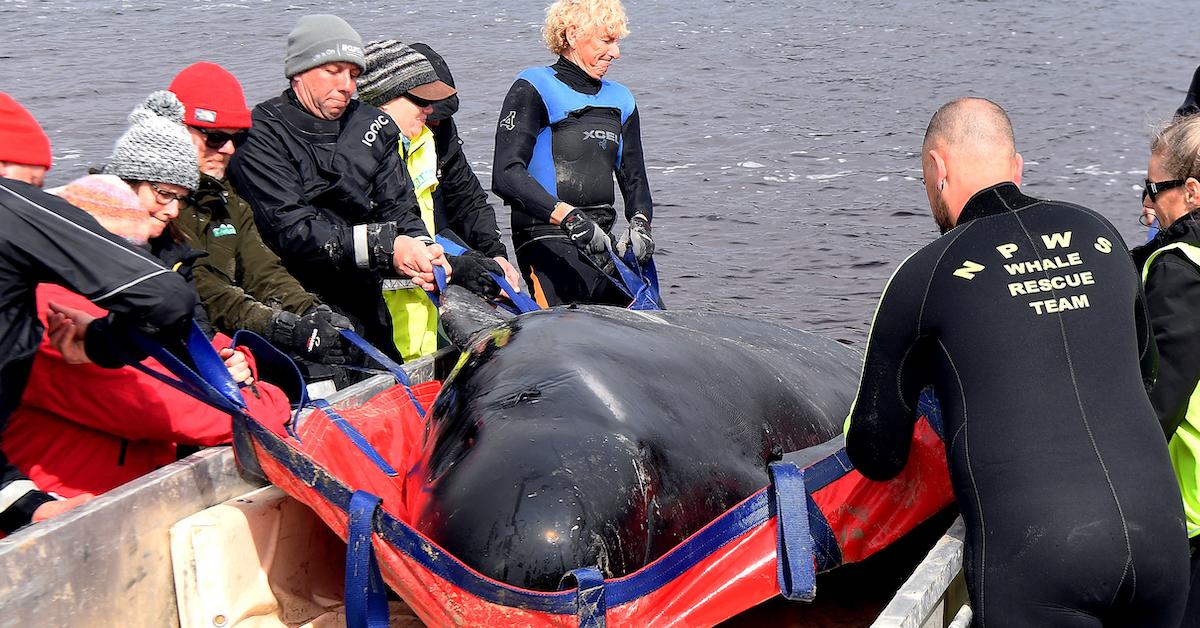
The Wadden Sea’s ecosystem, while rich in biodiversity, is a death trap for deep-diving whales. Its vast mudflats, winding channels, and sudden drop-offs make navigation nearly impossible for animals relying on sonar. Even when guided, whales like Timmy often circle back due to disorientation.
Three major challenges defined the rescue:
- Tidal Timing – The window between high tides is short. Missing the next high tide meant Timmy could fully strand, drastically reducing survival odds.
- Whale Size and Stress – Weighing an estimated 12 tons, Timmy could not be physically moved. Any handling risked panic, injury, or drowning.
- Navigation Confusion – Sperm whales use long-range vocal communication. With no nearby pod, Timmy lacked the social cues needed to reorient.
One misstep during early guidance attempts confirmed these risks. When boats moved too close in an effort to redirect him, Timmy bolted—heading toward a narrower, shallower channel. This underscored a key principle in marine rescue: minimal intervention often yields better outcomes. Experts later noted that excessive noise or crowding can trigger flight behavior, negating hours of careful effort.
The Breakthrough: Guiding Timmy Back to Deep Water
At approximately 3:47 PM, with water levels rising, a coordinated maneuver began. Instead of surrounding Timmy, rescuers formed a “sound corridor” using boat engines set to low-frequency idling. This subtle acoustic guidance, combined with the return of tidal flow, appeared to trigger Timmy’s instinct to follow deeper currents.
Photographs from this phase show Timmy slowly turning, his fluke lifting with renewed strength as he moved toward a navigable channel. Rescue drones captured the moment he disappeared into open water—met with cautious celebration among the team.
“It wasn’t a single action that saved him,” said Dr. Lena Hofmann, a marine biologist on-site. “It was the timing, the tide, the silence we maintained, and the whale’s own will. We didn’t rescue Timmy. We gave him a chance.”
The Role of Public and Media Coverage
Within hours, images of Timmy’s struggle went viral. German news outlets, international wire services, and conservation NGOs shared live updates. The hashtag #TimmyTheWhale trended in Europe, drawing attention to broader issues of ocean health, sonar disruption from shipping, and climate-related shifts in whale migration.
However, media attention brought complications. Drones operated by amateur photographers flew too close, disrupting communication signals and adding stress. Authorities issued a no-fly zone within 500 meters of the site—a reminder that public interest, while valuable, must be balanced with animal welfare.
The photos that resonated most were not the dramatic wide-angles, but intimate close-ups: a rescuer’s hand resting on Timmy’s rostrum, a drop of seawater glistening on his eye, the reflection of sky in his skin. These images, devoid of sensationalism, emphasized dignity over drama.
Why Some Whale Rescues Fail—And What This One Got Right
Not all whale interventions end as hopefully as Timmy’s. In 2020, a young sperm whale died in the Elbe River despite weeks of effort. Post-mortem examination revealed severe gastric blockages from plastic debris—highlighting that rescue attempts can’t compensate for systemic ocean threats.
Common failure points in whale rescues include:
- Delayed detection
- Poor coordination between agencies
- Premature attempts at physical towing
- Lack of tidal planning
- Public interference
Timmy’s case avoided these pitfalls. Early detection allowed rapid response. Interagency protocols were already in place. No towing was attempted. Tidal data was precisely modeled. And media cooperation limited disruptions.
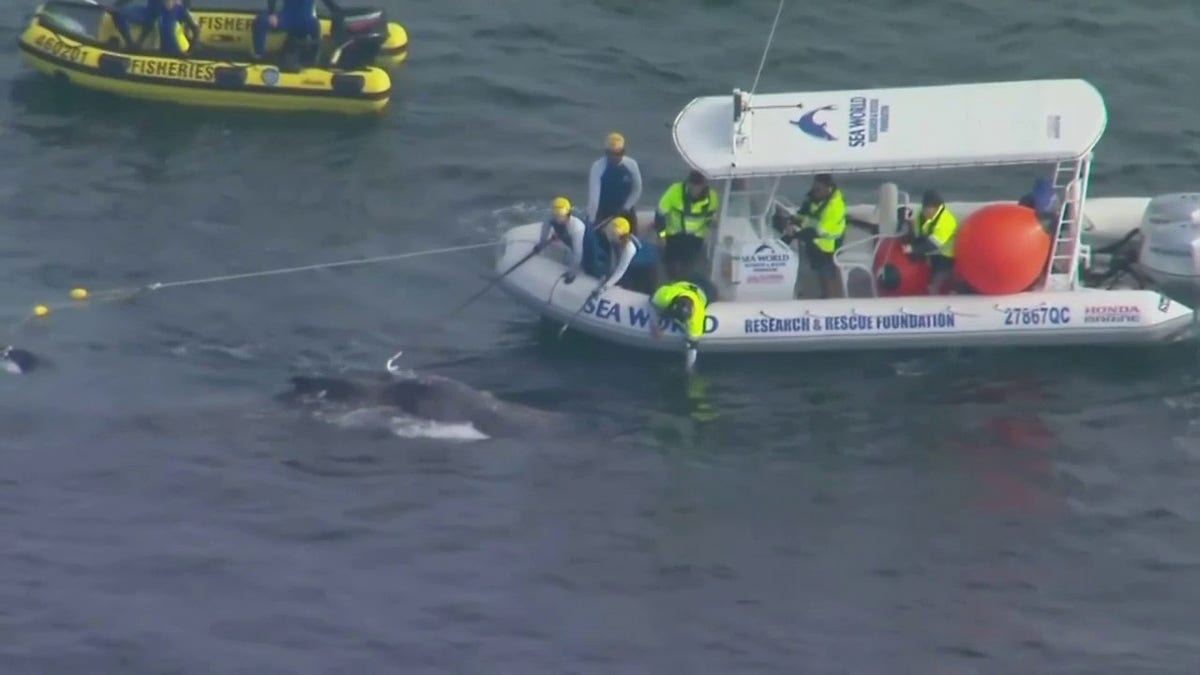
Most importantly, the team prioritized patience. “We’ve seen too many cases where people want to ‘do something’—anything—right away,” said maritime emergency coordinator Jörg Müller. “Sometimes the best action is waiting for the right moment.”
What Happens After the Rescue?
Timmy’s successful return to open water does not guarantee long-term survival. Sperm whales that enter shallow zones often do so due to illness, injury, or disorientation from geomagnetic anomalies. Without pod support, they struggle to hunt or navigate.
Satellite tagging was considered, but dismissed due to the stress of capture. Instead, German and Dutch marine networks are monitoring the area using passive sonar and aerial surveys. A sighting of Timmy traveling northward with improved movement patterns was reported 48 hours post-rescue, suggesting he may have regained orientation.
Long-term, Timmy’s case strengthens arguments for expanded marine monitoring systems in high-risk zones. The German government is reviewing proposals for real-time sonar alert networks along the North Sea coast—technology capable of detecting unusual whale movements before strandings occur.
A Moment of Hope in Marine Conservation
Timmy’s rescue was not a spectacle. It was a quiet, calculated act of persistence—guided by science, shaped by tide and terrain, and fueled by the collective hope of those who believe these animals deserve a second chance.
The photographs that emerged tell a layered story: of vulnerability, of human effort, and of nature’s resilience when given space to heal. They remind us that conservation is not always about grand policies or global treaties. Sometimes, it’s about standing in cold mud, pouring seawater over a dying whale’s back, and waiting for the tide to turn.
For anyone who saw those images, the message was clear: every life in the ocean matters. And sometimes, with the right timing and restraint, we can help one find its way home.
Frequently Asked Questions
Why was Timmy the whale in shallow water? Sperm whales like Timmy typically inhabit deep ocean waters. They may enter shallow zones due to illness, navigational errors caused by geomagnetic shifts, or separation from their pod—especially young males exploring new territories.
Was Timmy the whale tagged after rescue? No physical tag was attached. Due to the stress of capture, tagging was deemed too risky. Instead, marine teams are using aerial and sonar monitoring to track possible movements in the North Sea.
How do rescuers guide whales back to sea? Teams use acoustic guidance (boat engine sounds, recorded whale calls), physical boat positioning to create directional barriers, and timing efforts with high tides to maximize the whale’s ability to swim freely.
Can sperm whales survive after stranding attempts? Survival depends on duration of stranding, physical condition, and successful reorientation. Many face internal injuries or disorientation afterward. Long-term survival is possible if the whale rejoins a pod or regains navigational ability.
Why can’t rescuers just lift the whale back into deep water? Sperm whales can weigh over 10 tons. Lifting is not feasible on soft mudflats, and sudden movement can cause fatal injury. Their bodies are adapted to water buoyancy—on land, internal organs can collapse under their own weight.
Were there any injuries observed on Timmy? Initial visual assessments showed no external wounds, but veterinarians noted signs of fatigue and possible disorientation. Full health assessment was not possible without close capture, which was avoided to reduce stress.
How can the public help prevent whale strandings? Support marine conservation efforts, reduce plastic use, advocate for quieter shipping lanes, and report stranded or distressed marine animals immediately to local authorities. Avoid interfering with active rescue zones.
FAQ
What should you look for in Timmy the Whale Rescue Attempt Begins Off German Coast? Focus on relevance, practical value, and how well the solution matches real user intent.
Is Timmy the Whale Rescue Attempt Begins Off German Coast suitable for beginners? That depends on the workflow, but a clear step-by-step approach usually makes it easier to start.
How do you compare options around Timmy the Whale Rescue Attempt Begins Off German Coast? Compare features, trust signals, limitations, pricing, and ease of implementation.
What mistakes should you avoid? Avoid generic choices, weak validation, and decisions based only on marketing claims.
What is the next best step? Shortlist the most relevant options, validate them quickly, and refine from real-world results.