The commercial aviation landscape just got more tense. United Airlines CEO Scott Kirby has publicly criticized American Airlines for refusing to engage in merger discussions, calling the rejection short-sighted and damaging to the long-term health of the U.S. airline industry. The sharp rebuke isn’t just corporate posturing—it signals deep strategic fractures at the top of the sector and raises real questions about competition, efficiency, and consumer impact.
This isn’t the first time merger rumors have swirled around the two carriers. But Kirby’s direct, public condemnation marks a new escalation in rhetoric and reveals a growing frustration among industry leaders about fragmented operations and shrinking margins.
Why United Wants a Merger—And Why It Makes Sense
United’s interest in merging with American isn’t about ego or empire-building. It’s about economics. Despite record-breaking travel demand post-pandemic, major U.S. carriers are grappling with rising fuel costs, labor shortages, and infrastructure strain. A union between United and American—the second- and third-largest U.S. airlines by fleet size and revenue—would create a dominant player capable of extracting better deals from aircraft manufacturers, airports, and labor unions.
Strategic Advantages of a United-American Merger
- Network Efficiency: Merging route networks would eliminate redundancies on overlapping domestic routes (e.g., Dallas to Chicago, Los Angeles to New York) and boost international reach through combined hubs.
- Cost Synergy: Analysts estimate potential savings of $1.5–$2.5 billion annually through fleet standardization, reduced overhead, and shared procurement.
- Global Competitiveness: A merged entity could better compete with Middle Eastern carriers like Emirates and Etihad, which benefit from massive state-backed investment and seamless hub operations.
Scott Kirby, a former American Airlines executive, understands these dynamics intimately. He knows where the inefficiencies lie—and he’s not afraid to say American is standing in its own way.
American’s Refusal: Fear, Ego, or Something Else?
American Airlines’ leadership dismissed merger talks early, with CEO Robert Isom stating the airline is “focused on executing its own plan.” But industry insiders see deeper motives: fear of cultural clash, concerns over brand dilution, and anxiety about leadership succession.
There’s also the political angle. American is headquartered in Fort Worth, Texas—deep in Republican territory—while United is based in Chicago, a more liberal hub. In today’s polarized climate, even corporate decisions can take on symbolic weight.
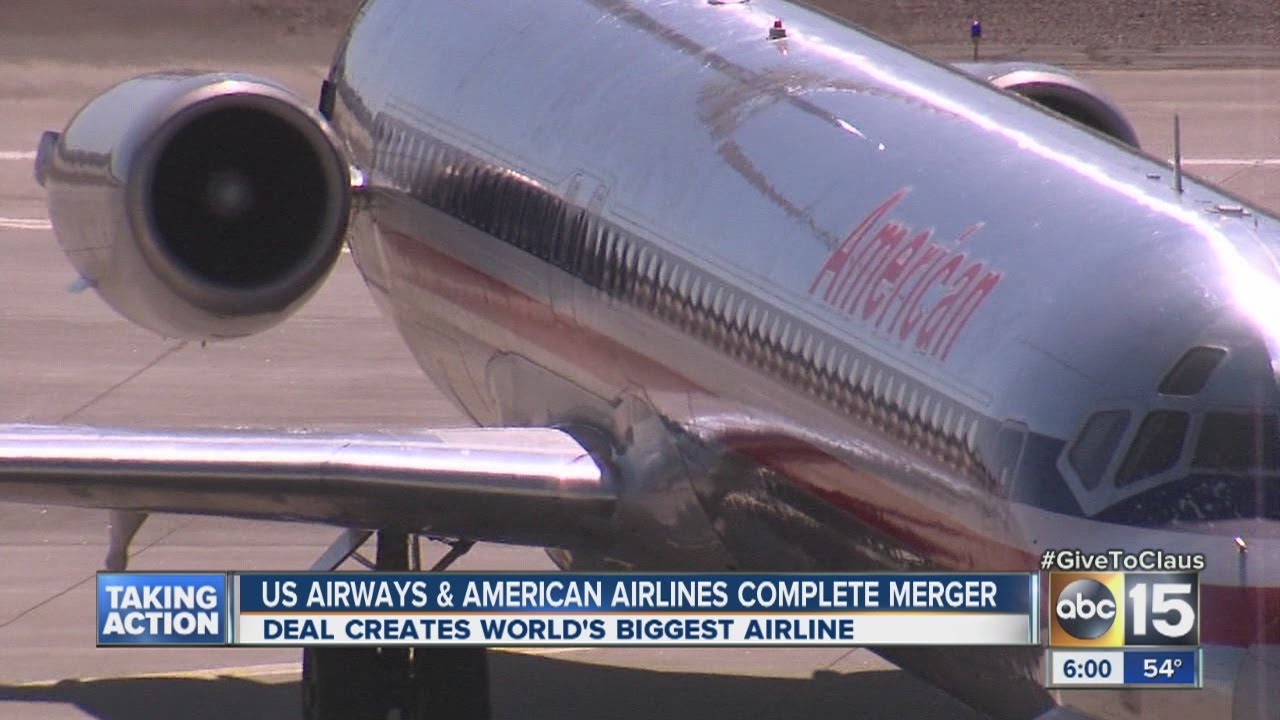
But the most pressing concern for American may be antitrust scrutiny. A merger between the two airlines would create a carrier controlling over 40% of the U.S. domestic market. The Department of Justice (DOJ) blocked the American-US Airways merger in 2013—before ultimately allowing it after concessions. Today, with the Biden administration taking a harder stance on monopolies, regulatory approval would be an uphill battle.
Still, Kirby argues the DOJ is overlooking the broader picture: that global aviation is consolidating, and U.S. carriers are falling behind.
The Real Cost of Not Merging
While American plays defense, the long-term consequences of inaction could be severe.
Shrinking Profit Margins Both airlines are dealing with thinner margins despite high passenger volumes. In 2023, United reported a net margin of 3.8%, while American came in at just 2.1%. Without scale advantages, these numbers could erode further as fuel prices fluctuate and labor costs rise.

Inefficiency in Hub Operations American’s Dallas/Fort Worth (DFW) and Charlotte hubs overlap significantly with United’s Chicago (ORD) and Houston (IAH) operations. A merged airline could optimize schedules, reduce gate congestion, and improve on-time performance—something both carriers struggled with during the 2023 holiday travel chaos.
Weaker Negotiating Power Airlines buy planes in bulk, but Boeing and Airbus aren’t exactly bending over backward for individual carriers. A larger, combined United-American fleet would give the new entity more leverage in negotiations—potentially shaving millions off each aircraft order.
Kirby’s frustration is understandable: he sees a path to stability and strength, and American’s leadership is slamming the door.
What’s Really Behind the Public Feud? This isn’t just about strategy. It’s about ego, legacy, and control.
Scott Kirby built his reputation on operational excellence and data-driven decision-making. He spent years at American before moving to United in 2010 and rising to CEO in 2020. His critique of American isn’t just professional—it’s personal. He knows the airline’s weaknesses and believes his former employer is ignoring a historic opportunity.
Meanwhile, Robert Isom, American’s CEO since 2022, is trying to stabilize a company still recovering from years of operational missteps and customer service crises. Accepting a merger could be seen as an admission of failure—something leaders rarely embrace willingly.
But there's another layer: investor sentiment. American’s stock has underperformed United’s over the past three years. A merger might provide a short-term boost, but integration risks—cultural clashes, IT system failures, labor unrest—could scare off shareholders.
Precedent: When Airline Mergers Worked (and Failed)
Not all airline mergers are created equal. Some transformed the industry. Others turned into cautionary tales.
Success: Delta-Northwest (2008)
- Combined fleet: ~800 aircraft
- Result: Became the world’s largest airline at the time
- Outcome: Smooth integration, improved network, strong financial recovery
Delta leveraged Northwest’s Asian routes and Minneapolis hub to expand globally. The merger is now seen as a textbook example of successful consolidation.
Failure: Air France-KLM (2004)
- Goal: Create a trans-European powerhouse
- Reality: Cultural misalignment, labor disputes, stagnant growth
- Result: Two separate brands with minimal synergy
The merger never delivered promised savings. Differing management styles and national regulations prevented true integration.
Cautionary Tale: United-Continental (2010)
- United struggled for years with IT integration, employee morale, and branding
- Took nearly a decade to fully unify operations
- Customer satisfaction plummeted during the transition
United’s own painful merger experience likely informs Kirby’s approach now—he’s not advocating for a rushed deal, but for a deliberate, well-planned union.
What Happens Next?
The immediate outlook is stalemate. American has no interest in talking. The DOJ would likely block a forced merger. And shareholders on both sides remain cautious.
But pressure will grow. Rising interest rates, aging fleets, and the cost of decarbonization (e.g., sustainable aviation fuel, new eco-efficient aircraft) will strain balance sheets. At some point, survival may depend on scale.
Possible Scenarios Moving Forward:
| Scenario | Likelihood | Impact |
|---|---|---|
| Friendly merger talks resume | Low | High upside if structured well |
| Hostile takeover attempt | Very Low | Regulatory and cultural barriers too high |
| Strategic alliance (e.g., joint ventures) | Medium | Limited benefits, but politically safer |
| Continued independent operation | High | Risk of long-term decline in competitiveness |
A joint venture on transatlantic routes—similar to the United-Lufthansa or American-British Airways partnerships—could be a compromise. But it wouldn’t deliver the full scale United’s leadership believes is necessary.
Consumer Impact: Fewer Choices, Higher Fares?
Critics fear that fewer major airlines mean less competition—and higher prices for travelers.
Historically, that concern has merit. After the American-US Airways merger, fares increased on overlapping routes by an average of 10–15%, according to a 2017 study by the U.S. Travel Association.
But consolidation isn’t always bad for consumers. Delta’s post-merger improvements in on-time performance and customer service show that scale can enable better investment in experience.
The real threat isn’t a merger—it’s stagnation. Without investment in modern fleets, digital infrastructure, and employee training, all airlines risk delivering a worse product over time.
The Bottom Line: Leadership, Not Just Logistics
At its core, this dispute isn’t about spreadsheets or fleet counts. It’s about leadership vision.
Scott Kirby sees a future where U.S. airlines are leaner, stronger, and globally competitive. He believes refusing to discuss a merger with American is a failure of imagination.
American’s leadership, in contrast, appears to prioritize independence over transformation—betting that incremental improvements will be enough to survive.
But in an era of rapid change, doing nothing is a decision too. And it may be the riskiest one of all.
For travelers, investors, and industry watchers, the standoff offers a rare glimpse into the high-stakes calculus of airline strategy. Whether this conflict leads to negotiation, further fragmentation, or regulatory intervention, one thing is clear: the U.S. aviation sector is at a crossroads.
The path forward won’t be easy. But ignoring the pressure to evolve could cost far more than any merger ever would.
What You Should Do Next If you’re an investor, monitor both airlines’ earnings calls for hints of renewed talks or strategic shifts. If you’re a frequent flyer, consider diversifying your loyalty—relying on one airline may become riskier in a consolidating market. And if you work in aviation, prepare for continued turbulence: the era of the standalone mega-carrier may be ending, whether leaders like it or not.
FAQ
Why did American Airlines refuse merger talks with United? American cited a focus on executing its own strategic plan, though internal resistance, leadership concerns, and antitrust fears likely played a role.
Could a United-American merger actually happen? It’s unlikely in the short term due to American’s refusal and expected DOJ opposition, but long-term industry pressures could revive talks.
Would a merger lead to higher airfares? Possibly on overlapping routes, as reduced competition often leads to price increases, though improved efficiency could offset some costs.
How would a merger affect frequent flyer programs? Initially, confusion and devaluation risks; long-term, a unified program could offer broader benefits if managed well.
Has United tried to merge with other airlines before? Yes—United’s 2010 merger with Continental was notoriously difficult but eventually succeeded after years of integration.
What airlines are likely merger candidates now? JetBlue and Spirit (though blocked in 2023), Alaska and Hawaiian (facing legal challenges), and potential international joint ventures.
Who benefits most from airline mergers? Airlines gain cost savings and pricing power; passengers may get better service but fewer choices and higher fares on some routes.
FAQ
What should you look for in United CEO Slams American Airlines Over Merger Rejection? Focus on relevance, practical value, and how well the solution matches real user intent.
Is United CEO Slams American Airlines Over Merger Rejection suitable for beginners? That depends on the workflow, but a clear step-by-step approach usually makes it easier to start.
How do you compare options around United CEO Slams American Airlines Over Merger Rejection? Compare features, trust signals, limitations, pricing, and ease of implementation.
What mistakes should you avoid? Avoid generic choices, weak validation, and decisions based only on marketing claims.
What is the next best step? Shortlist the most relevant options, validate them quickly, and refine from real-world results.