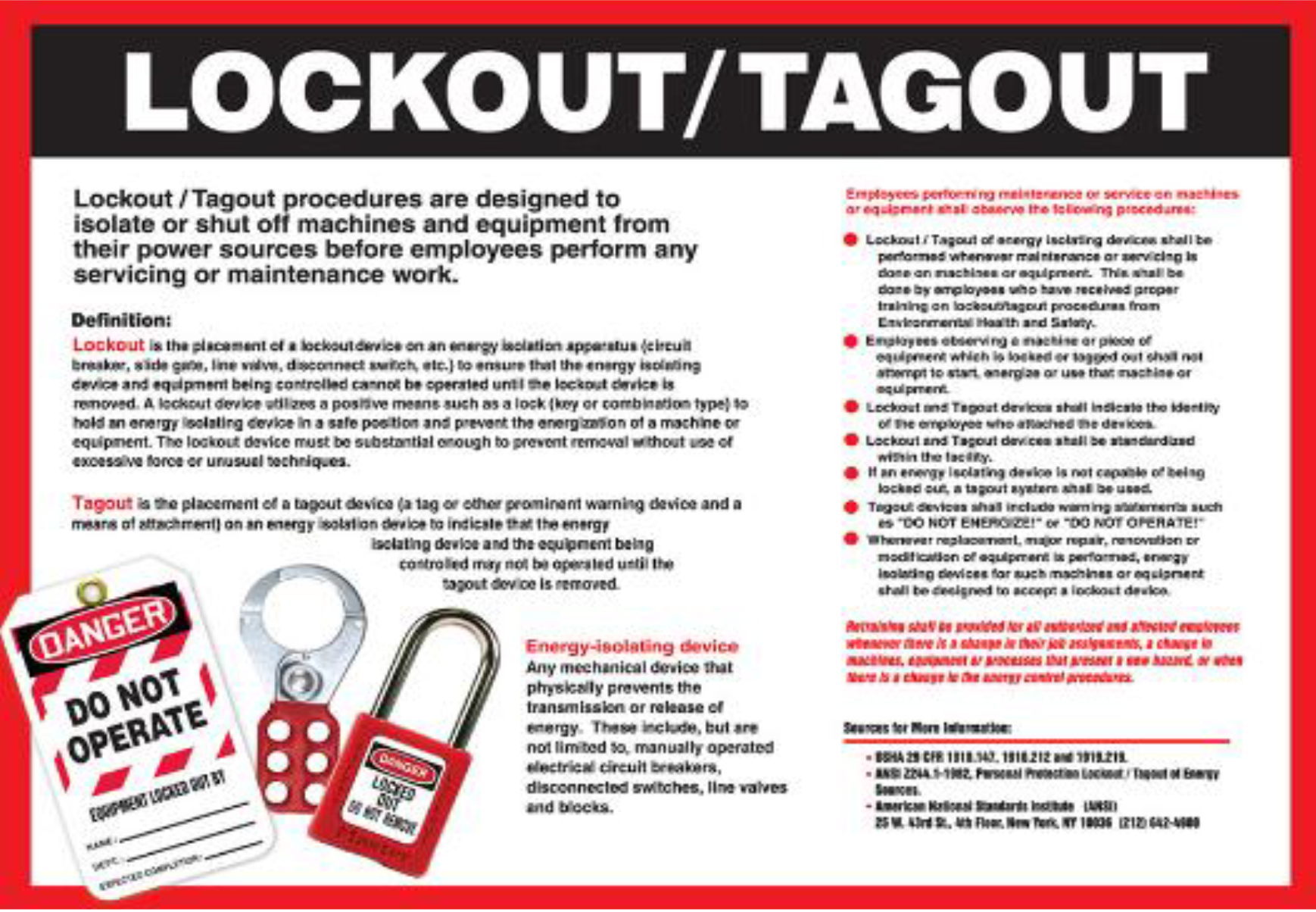
Equipment doesn’t warn you before it starts. A conveyor belt kicks on unexpectedly. A press machine cycles mid-maintenance. Hydraulic fluid sprays from a line thought to be depressurized. These aren’t hypotheticals—they’re real incidents caused by one failure: skipping lockout tagout (LOTO).
The core question isn’t whether you should use LOTO. It’s knowing when it’s required. Misjudging that moment risks amputation, electrocution, or worse. This guide cuts through ambiguity to show exactly when lockout tagout is needed—and when it’s not.
What Triggers the Need for Lockout Tagout?
Lockout tagout is required whenever workers service or maintain machines or equipment where unexpected energization, startup, or release of stored energy could cause injury.
That definition—rooted in OSHA 29 CFR 1910.147—boils down to three conditions:
- The task involves servicing or maintenance
- Not routine operations. Think cleaning jams, replacing parts, adjusting components, or making mechanical changes.
- An employee must place any body part into a point of operation or danger zone
- Reaching into a machine to clear a paper jam? That qualifies. Wiping down the exterior with the machine off? Usually doesn’t.
- There’s a risk of unexpected startup or energy release
- Even if the machine is off, residual pressure, gravity, or capacitors can activate hazards.
Example: A worker clearing a jam in a printing press must shut down, isolate energy sources, lock out the main disconnect, and tag the device. Failure to do so risks the press cycling automatically when reset—crushing hands or arms.
Common mistake: Believing that pressing an emergency stop (E-stop) is enough. E-stops don’t isolate energy. They only interrupt control circuits. The machine can still restart.
Routine vs. Non-Routine Tasks: Where the Line Is Drawn
One of the most common compliance errors? Confusing routine production with maintenance work.
OSHA draws a clear boundary using the “minor servicing” exception under 1910.147(a)(2)(ii). Here’s how to interpret it:
| Scenario | LOTO Required? | Why |
|---|---|---|
| Operator clears a jam during normal production using simple tools (e.g., broom, gloved hand) | No | Considered routine, repetitive, integral to production |
| Mechanic replaces a motor bearing using wrenches and lifts | Yes | Non-routine maintenance involving hazardous energy |
| Janitor cleans inside a powered mixer after shift ends | Yes | Employee exposed to danger zone; not during normal operation |
| Technician calibrates a robotic arm using teach mode | Yes | Adjusting control systems with potential for startup |
Key insight: “Routine” doesn’t mean “common.” It means integral to production, performed frequently, and using standardized tools. Anything beyond that—especially disassembly, adjustments, or repairs—requires full LOTO.
Types of Energy That Demand Lockout Tagout
LOTO isn’t just about electricity. Any stored or residual energy source capable of causing harm must be controlled.
Here are the primary energy types that trigger LOTO:
- Electrical – circuits, motors, control panels
- Mechanical – springs, flywheels, belts, rotating shafts
- Hydraulic – pressurized fluid lines, cylinders
- Pneumatic – compressed air systems
- Chemical – reactive substances under pressure
- Thermal – steam lines, hot surfaces
- Gravitational – suspended loads, elevated parts
Real-world case: A mechanic servicing a hydraulic lift failed to lower the platform before disconnecting. Residual pressure caused sudden descent, pinning his leg. The lift wasn’t electrically powered at the time—but hydraulic and gravitational energy remained uncontrolled.
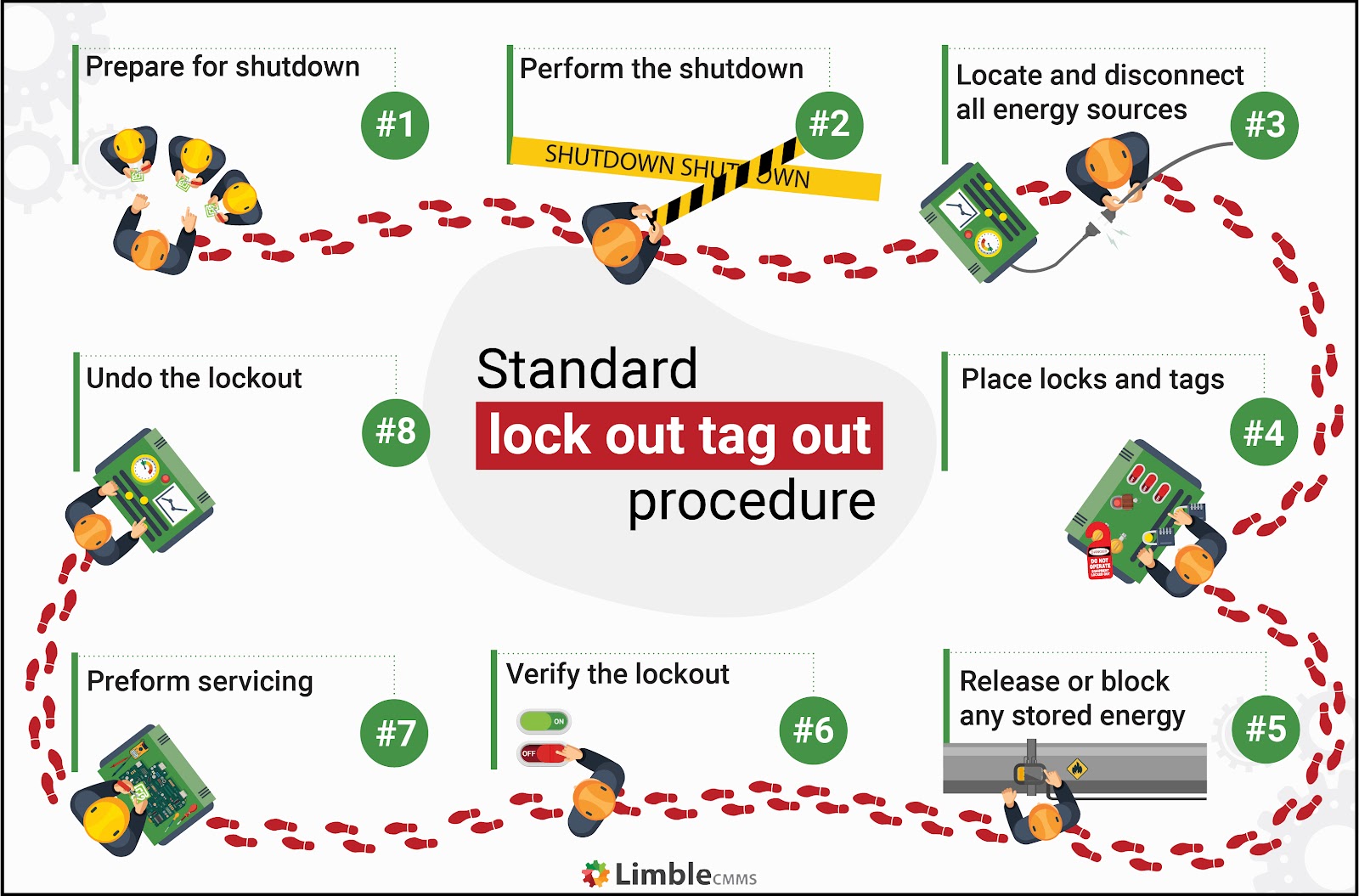
Critical step: Always verify de-energization. Use test instruments, bleed lines, block moving parts, and physically confirm isolation.
Situations Where Lockout Tagout Is Always Required
Certain activities leave no room for interpretation. These always require LOTO:
1. Replacing or Repairing Machine Components Swapping belts, motors, sensors, or valves? The machine must be fully isolated. Even if power is off, stored energy in springs or hydraulics can activate.
2. Performing Internal Maintenance Opening guards, removing panels, or accessing internal mechanisms means exposure to danger zones. Lockout prevents remote or automatic restart.
3. Adjusting Equipment Under Power No, this isn’t allowed—unless using alternative methods like control circuit protection (with strict limitations). True adjustments during operation bypass safety and violate LOTO standards.
4. Cleaning Inside Machines Exterior wipe-downs? Usually safe without LOTO. But inserting arms or tools into chutes, hoppers, or cutting zones? Full energy isolation is mandatory.
5. Responding to Equipment Failures
When a machine malfunctions, stress and urgency rise. But skipping LOTO to “just fix it quickly” is how injuries happen. Diagnosing a fault inside a control cabinet still requires lockout.
When Lockout Tagout May Not Be Required
Not every interaction demands full LOTO. The minor servicing exception applies under strict conditions:
- The activity is routine, repetitive, and integral to production
- It occurs during normal operation
- Only simple tools (e.g., hand tools, brushes) are used
- Required safeguards (like fixed guards or presence-sensing devices) are in place and functional
Example: An operator uses a push stick to clear a jam in a conveyor. The conveyor has a light curtain that stops movement when breached. This setup may qualify as an exception—but only if the safeguard is reliable and the action is part of regular operation.
Warning: Many companies misapply this exception. If multiple tools are needed, disassembly occurs, or safety devices are bypassed—even briefly—LOTO is required.
Industry-Specific Scenarios That Require LOTO
Different sectors face unique risks. Here’s how LOTO applies across fields:
Manufacturing Robotic cells, CNC machines, stamping presses—all require lockout during maintenance. Even programming a robot arm near live zones demands energy control.
Healthcare MRI machines store powerful magnetic fields. Maintenance requires quenching and lockout procedures. Autoclaves use steam and pressure—requiring isolation before internal cleaning.
Food Processing Conveyor systems, slicers, mixers. A common hazard: attempting to clean a meat grinder while it’s still connected. LOTO prevents catastrophic hand injuries.
Facilities & Maintenance HVAC units, boilers, elevators. A technician working on a chilled water pump must isolate electrical and mechanical energy—even if the system seems inactive.
Construction While OSHA 1910.147 doesn’t cover all construction, equipment like compressors, generators, and saws still need energy isolation during servicing.
Common LOTO Mistakes That Lead to Incidents
Knowing when LOTO is needed means nothing if execution fails. These errors undermine even the best policies:
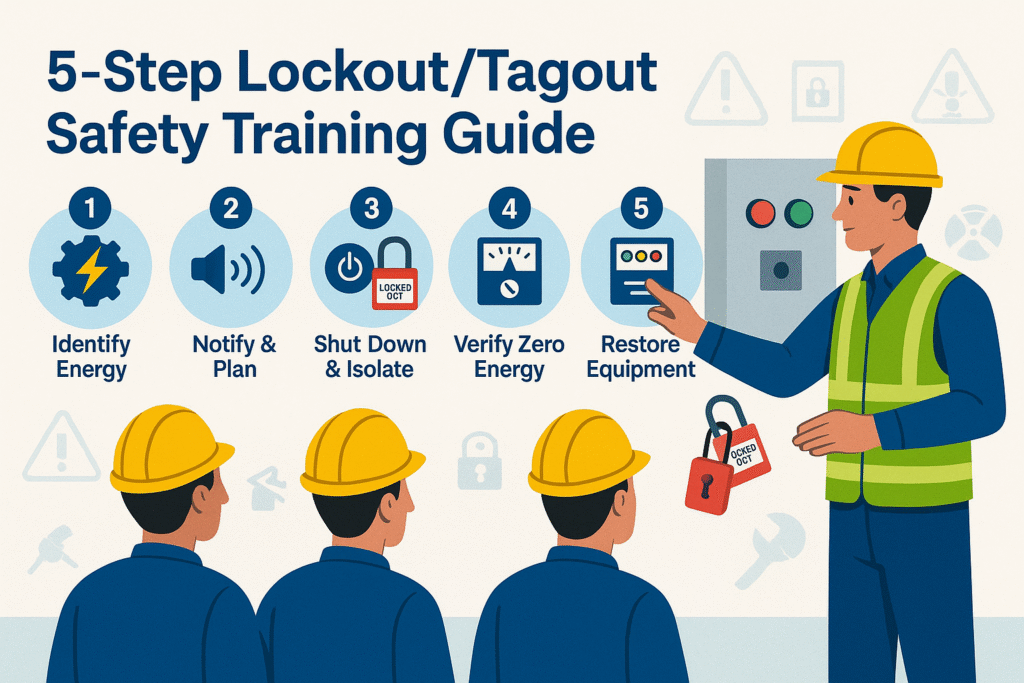
- Using tags without locks – Tags alone don’t prevent startup. Only lockout provides physical isolation.
- Not verifying isolation – Assuming a switch is off without testing leads to false confidence.
- Skipping group lockout procedures – Multiple workers? Each needs their own lock. Shared locks create blind spots.
- Failing to train temporary staff – Contract workers often lack LOTO training but access the same machinery.
- Rushing re-energization – Not confirming all tools are clear and personnel are away before restarting.
Pro tip: Conduct periodic LOTO audits. Watch real maintenance tasks. More than 60% of deficiencies are found only through observation—not paperwork.
Building a Reliable LOTO Decision Workflow
Avoid guesswork with a clear decision tree:
- Is maintenance or servicing being performed?
- If no → LOTO not needed. If yes → proceed.
- Does the task require any body part to enter a danger zone?
- Danger zones include points of operation, nip points, or under suspended parts. If yes → proceed.
- Could unexpected energization cause harm?
- Consider all energy sources. If yes → LOTO required.
- Is the task routine, repetitive, and safeguarded?
- If all are true → minor servicing exception may apply. If not → LOTO required.
Document it: Each machine should have a written energy control procedure outlining steps, energy sources, and authorized personnel.
Final Word: Don’t Decide Based on Convenience
"Lockout tagout needed?" isn’t a question to answer on the fly. It’s a safety threshold defined by exposure, energy, and activity—not urgency or familiarity.
When in doubt, lock it out. The few extra minutes spent isolating energy prevent life-altering injuries. A strong LOTO program isn’t about red locks and tags—it’s about creating a culture where no one hesitates to ask: Is this machine truly safe?
Start by auditing your highest-risk equipment. Confirm procedures are written, current, and followed. Train every employee—not just mechanics. Because safety isn’t optional when energy is in play.
When Is Lockout Tagout Needed: Key Questions
When is lockout tagout required by OSHA? LOTO is required during servicing or maintenance when employees are exposed to hazardous energy that could cause injury from unexpected startup or release.
Do you need LOTO for cleaning? Yes—if cleaning requires entering a danger zone, such as reaching into a machine. Routine external cleaning usually does not require LOTO.
Is LOTO needed for minor repairs? Yes, if the repair involves accessing moving parts, adjusting components, or working near points of operation—even if the task is simple.
Can you use a tag without a lock? Only in limited cases where a lock can’t be applied and a tag is part of a full energy control program. Tags alone are not sufficient isolation.
Who is authorized to perform LOTO? Only trained and authorized employees who understand the energy sources, procedures, and verification steps for the equipment.
Does LOTO apply to battery-powered tools? Yes. Batteries store electrical energy. Removing or servicing such tools requires disconnecting and securing the power source.
What happens if LOTO is not followed? Consequences include severe injury, OSHA citations, fines up to $15,625 per violation, and increased workers’ compensation claims.
FAQ
What should you look for in When Is Lockout Tagout Needed: A Practical Guide for Safety? Focus on relevance, practical value, and how well the solution matches real user intent.
Is When Is Lockout Tagout Needed: A Practical Guide for Safety suitable for beginners? That depends on the workflow, but a clear step-by-step approach usually makes it easier to start.
How do you compare options around
When Is Lockout Tagout Needed: A Practical Guide for Safety? Compare features, trust signals, limitations, pricing, and ease of implementation.
What mistakes should you avoid? Avoid generic choices, weak validation, and decisions based only on marketing claims.
What is the next best step? Shortlist the most relevant options, validate them quickly, and refine from real-world results.