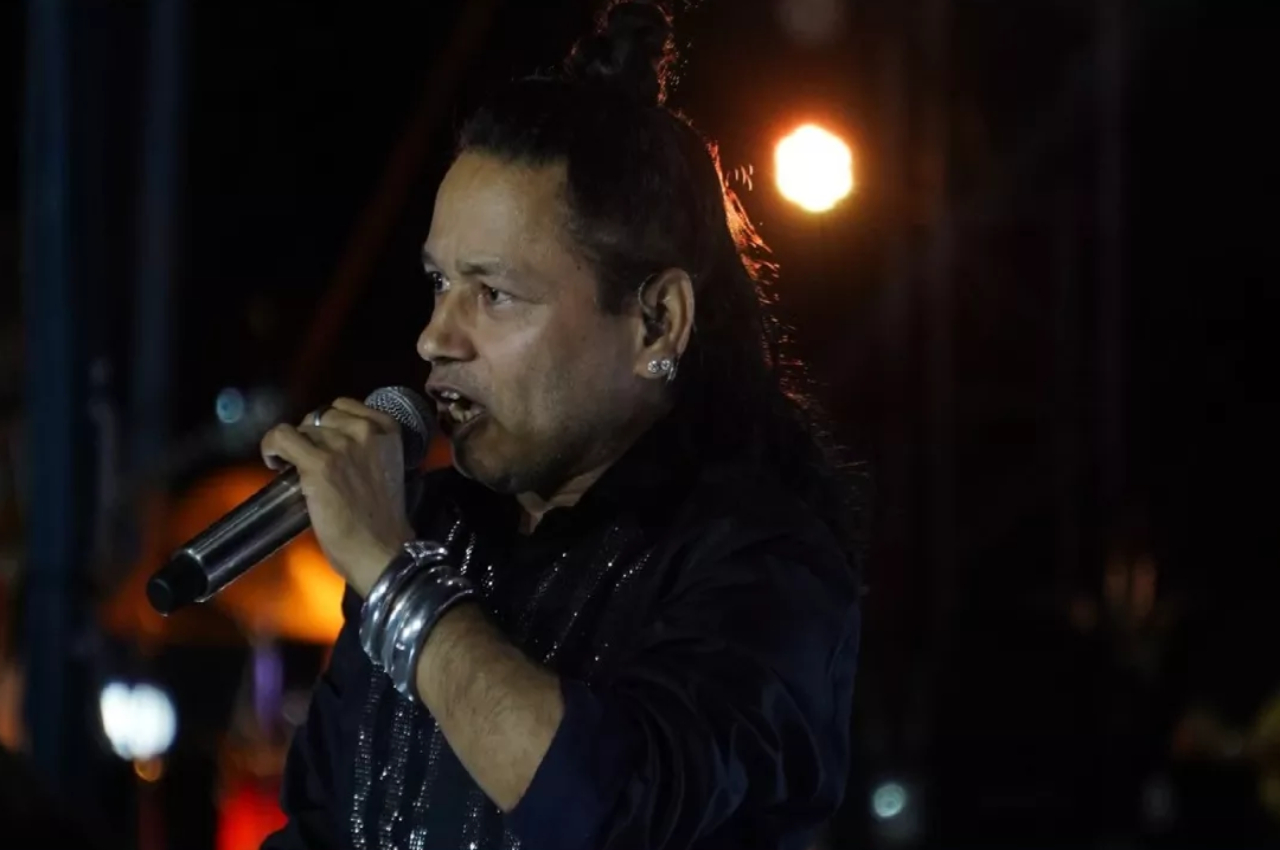
When an audience chants your name, the spotlight hits, and all they want is two lines—two simple lines—of your most beloved song, the unwritten rule is to oblige. But when Kailash Kher stood frozen at a recent Delhi gathering, arms crossed, declining to sing even a fragment of “Teri Deewani,” the moment didn’t just pass unnoticed. It exploded into a conversation about artist boundaries, fan entitlement, and the fine line between public figure and private self.
This wasn’t a concert. It wasn’t even a formal music event. It was a cultural gathering—low-key, unscripted—where Kher was invited as a guest of honor, not a performer. Yet, the crowd, energized by his presence, erupted into a chorus of demands: “Ek do lafzon mein gaana suna do!”—just sing two lines. What followed stunned many: a firm “Nahi” and a quiet but resolute refusal. No drama. No anger. Just a clear boundary drawn in real time.
The clip spread like wildfire. Within hours, hashtags like #RespectTheArtist and #KherSaidNo trended. Reactions were split—one side praised him for asserting dignity; the other accused him of arrogance. But beneath the noise lies a deeper story about artistic pressure in India’s public culture.
The Incident: What Actually Happened?
Let’s reconstruct the scene.
Kailash Kher attended a literary-cum-cultural evening at a Delhi auditorium, hosted by a regional arts foundation. The atmosphere was conversational. Speakers discussed Sufi philosophy, poetry, and music’s role in social change. Kher, known for his spiritual lyrics and raw voice, was there to speak—not perform.
Midway through the event, after his short talk on devotion in music, the audience—largely young, urban, and familiar with his commercial hits—began clapping rhythmically. Then came the chant: “Kailash Kher! Gaana sunao!” It started politely, then intensified: “Bas do antakshari lines! Nazar Lag Jayegi! Teri Deewani!”
A staff member approached Kher with a mic. He paused. Shook his head gently. Then said, clearly, “Aaj main gaata nahi hoon. Yeh request hi mat kijiye.” (I’m not singing today. Please don’t make this request.)
The room fell quiet. Some clapped in support. Others looked disappointed. A few recorded the exchange.
No confrontation. No raised voices. But the emotional weight was palpable.
Why Artists Push Back—And Why It Matters
Kher’s refusal wasn’t spontaneous ego. It was a statement—one echoed by many Indian artists in informal settings.
Consider the expectations placed on musicians in India:
- At weddings, relatives demand performances.
- At award shows, non-musicians are expected to “entertain.”
- At public forums, artists are treated as human jukeboxes, not thinkers.
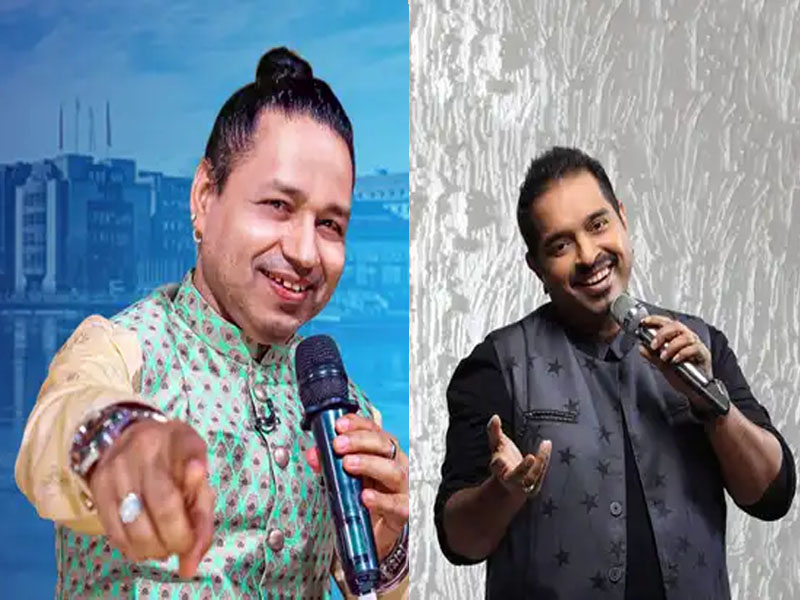
Kailash Kher, a Padma Shri awardee and one of India’s most respected voices, has sung for over two decades. His music blends Sufi, folk, and rock traditions. Yet, in public, he’s often reduced to a few radio-friendly refrains—“Allah Ke Bande,” “Kankadi,” “Teri Deewani.”
By saying no, he reminded the audience: I am not just a voice. I am a person. And this space is not for performance.
“Artists aren’t vending machines. You don’t insert an audience, press ‘play,’ and expect output.” — Cultural critic Aishwarya Nair, in a post-event commentary
The incident reflects a larger fatigue among performers. They’re expected to be “on” at all times—smiling, singing, signing, entertaining—regardless of context.
Public Perception: Praise vs. Backlash
Social media fractured into two camps.
Camp 1: “He Had Every Right”
Supporters pointed out:
- Kher wasn’t hired as a performer.
- The event wasn’t advertised as a concert.
- Artists deserve autonomy over their craft.
One Twitter user wrote: “If Amitabh Bachchan attends a poetry reading, do we demand he recites Sholay dialogues? Respect the context.”
Others highlighted how female artists like Shreya Ghoshal or Sunidhi Chauhan face even greater pressure—being asked to sing at random events, often with sexist undertones.
Camp 2: “He Could Have Given a Little”
Detractors argued:
- It was just two lines.
- Fans are the reason for his fame.
- A small gesture wouldn’t have hurt.
A common sentiment: “He didn’t need to shout. Just smile, sing ‘I’m a Deewani,’ and move on.”
But this misses the point. It’s not about the two lines. It’s about the precedent.
What happens when every public appearance becomes a performance demand? When artists can’t attend events as guests, only as entertainers?
The Psychology Behind the “Just Two Lines” Trap
“Just two lines” is a deceptively powerful phrase.
In behavioral psychology, it’s a form of foot-in-the-door technique—starting with a tiny ask to bypass resistance. Once you agree to “two lines,” the next step is “one more song,” then “take a selfie,” then “come to my cousin’s wedding.”
Artists know this spiral.
Kailash Kher, who once performed at 300+ events a year, has spoken about burnout. In a 2022 interview, he said: “I used to say yes to everything. Now I protect my voice, my energy, my intention.”
By refusing, he reclaimed control.
Think of it this way: A doctor isn’t expected to diagnose at a dinner party. A chef isn’t asked to cook at a friend’s meet-up. Why should a singer be treated as an on-call performer?
Cultural Context: The Indian Audience’s Performance Expectation
In Indian culture, talent is often seen as communal property.

From village festivals to corporate galas, the presence of a known artist triggers an automatic expectation: “Entertain us.”
This stems from traditions like mehfils and sangeets, where music was participatory. But today’s context is different. Artists are professionals—not court jesters.
Compare this to the West:
- At a TED Talk, no one expects Lin-Manuel Miranda to break into “Hamilton.”
- At a book launch, Neil Gaiman isn’t asked to recite Sandman.
Yet, in India, even non-singers at events are often pressured to “do something”—sing, dance, mimic a celebrity.
Kher’s refusal challenges this norm.
It says: My value isn’t just in what I perform. It’s in what I say, think, and represent.
What This Means for Artists and Audiences
The Delhi incident is a turning point—a cultural reset in making.
For artists, it’s a signal: You can say no.
For audiences, it’s a lesson: Respect the boundary.
Practical takeaways:
- Invite artists with clarity. If you want performance, hire them. Don’t assume presence equals permission.
- Honor context. A poetry reading isn’t a concert. A panel discussion isn’t an awards show.
- Reframe fandom. Admiration doesn’t grant access. Love the art, not just the artist’s availability.
Kailash Kher didn’t humiliate the audience. He educated them—with silence, with posture, with a simple “nahi.”
And in doing so, he may have done more for artist dignity than any speech could.
The Bigger Picture: Reclaiming Artistic Autonomy
This moment isn’t just about Kailash Kher.
It’s about every musician, dancer, or actor who’s been cornered into “just one song.”
It’s about the mother who pulls out her phone at a wedding and says, “Beta, sing for didi.”
It’s about the corporate host who announces, “And now, our guest will bless us with a performance.”
Kher’s refusal is part of a slow but growing movement.
Other artists have taken similar stands:
- Zakir Hussain once declined to play tabla at a dinner, saying, “I don’t perform on tables.”
- Vijay Raaz avoids singing at events, despite his musical roles.
- Shubha Mudgal has spoken openly about refusing “token performances” at cultural festivals.
These aren’t tantrums. They’re acts of self-respect.
And when icons like Kher model this behavior, it empowers younger artists to do the same.
Closing: A New Etiquette for Fan Culture
The viral clip of Kailash Kher saying “Yeh request hi mat kijiye” should be required viewing—not for gossip, but for guidance.
It’s time we evolve our cultural etiquette.
Next time you see an artist at an event, ask yourself:
- Was music part of the program?
- Was the artist paid or contracted to perform?
- Am I respecting their space—or treating them as entertainment?
If not, resist the impulse. Appreciate their presence. Listen to their words. But don’t demand their voice.
Kailash Kher didn’t lose fans that day.
He earned respect.
And perhaps, he started a conversation that needed to happen long ago.
Frequently Asked Questions
Why did Kailash Kher refuse to sing at the Delhi event? He was attending as a guest speaker, not a performer. He felt the request was inappropriate for the event’s context and chose to uphold artistic boundaries.
Was the audience aggressive in their demand? No, the audience was enthusiastic but not hostile. The chant was common at Indian public events, though persistent.
Has Kailash Kher refused to sing at other events? There’s no public record of frequent refusals, but he has spoken about limiting performances to protect his voice and mental well-being.
Did Kailash Kher apologize afterward? No formal apology was issued. He later stated in a radio interview: “I stand by my decision. Not every moment is for singing.”
Is it normal for artists to be asked to perform spontaneously? Yes, especially in India. Many musicians, actors, and dancers face unsolicited performance demands at weddings, public gatherings, and social events.
What can fans do instead of demanding songs? Engage with the artist’s ideas, thank them for their work, or attend their concerts where singing is expected and welcomed.
Does saying no affect an artist’s popularity? Not necessarily. In this case, many praised Kher’s integrity. Fans often respect boundaries when they understand the context.
FAQ
What should you look for in Kailash Kher Refuses to Sing, Sparks Reaction in Delhi? Focus on relevance, practical value, and how well the solution matches real user intent.
Is Kailash Kher Refuses to Sing, Sparks Reaction in Delhi suitable for beginners? That depends on the workflow, but a clear step-by-step approach usually makes it easier to start.
How do you compare options around Kailash Kher Refuses to Sing, Sparks Reaction in Delhi? Compare features, trust signals, limitations, pricing, and ease of implementation.
What mistakes should you avoid? Avoid generic choices, weak validation, and decisions based only on marketing claims.
What is the next best step? Shortlist the most relevant options, validate them quickly, and refine from real-world results.